Putting Your Infrastructure on the Map
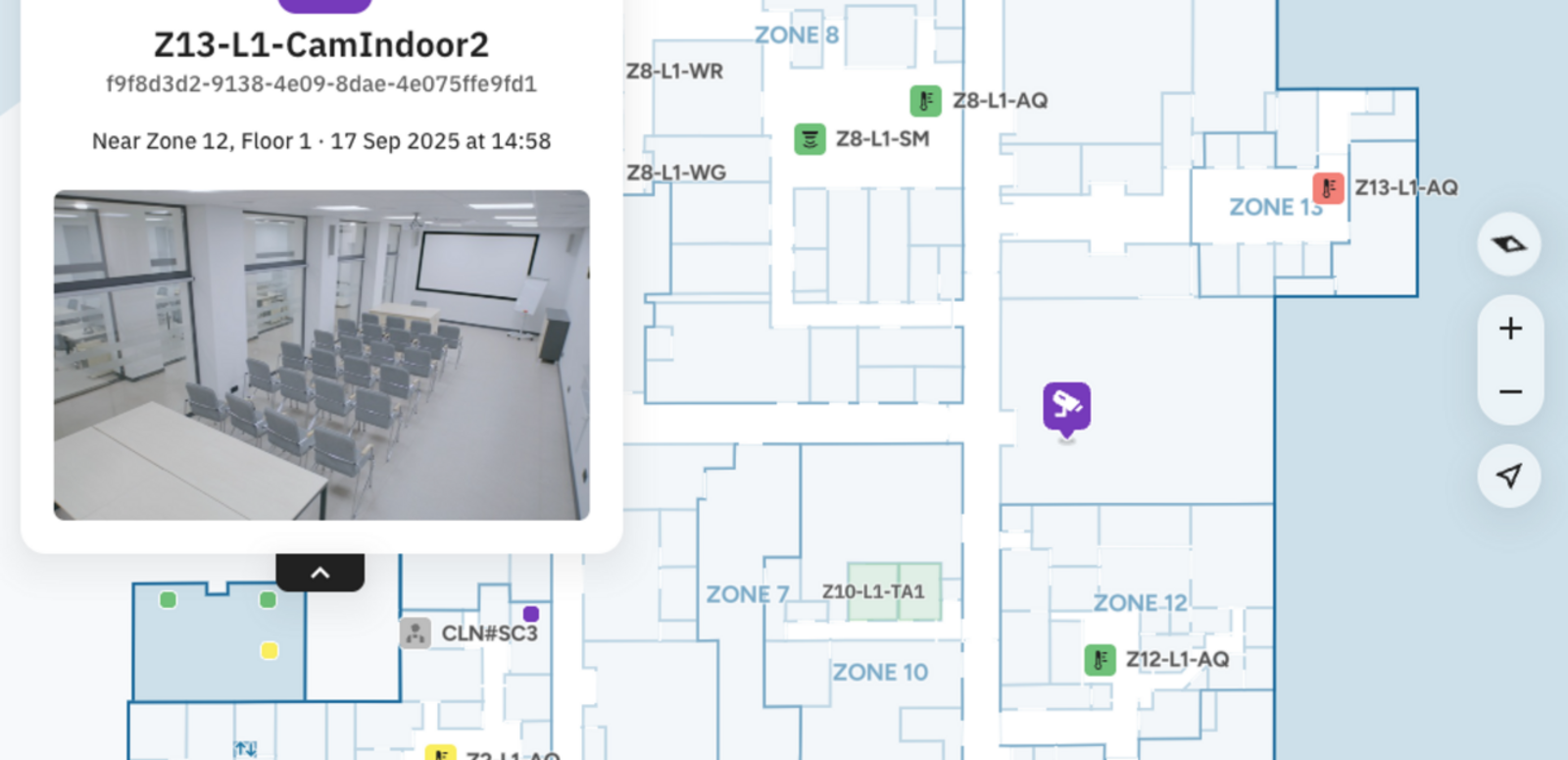
Static Asset Visualisation transforms how you track, locate, and maintain the thousands of fixed assets that keep your buildings running. By plotting your static infrastructure onto an interactive digital map, you gain immediate visual access to every critical asset — from utility meters to emergency equipment — without walking the building or searching through spreadsheets.
What it does
Every complex facility contains hundreds of static assets essential to operations, compliance, and safety: security cameras, fire escapes, utility meters, access points, clinical equipment, speakers, signage. Most organisations keep this information fragmented across multiple systems or paper records.
Static Asset Visualisation brings all of this together on a single interactive map. Each asset is positioned precisely where it exists in your building, with full contextual detail attached: asset type, location, condition, last service date, ownership, photos, and custom metadata. This creates a complete digital twin of your infrastructure.
Rather than a static register, your map becomes a working tool — updated in real-time, accessible across your teams, and integrated with your existing asset data systems.
Get in touch to see a full demo.
How it works
Step 1: Data Integration
Connect your existing asset data sources — spreadsheets, databases, asset management systems — to Living Map. You define which data points map to which asset types.
Step 2: Visual Plotting
Assets are automatically positioned on your digital floor plans at their precise real-world locations. The map shows asset status at a glance through visual indicators (colour coding, icons).
Step 3: Real-time Access
Teams locate any asset instantly. Tap or click on any asset to see full details, historical maintenance records, and associated documentation. Changes update immediately across all users.
Key capabilities
Comprehensive asset types
- Utility infrastructure: water meters, electrical switchgear, gas mains, distribution boards
- Network & IT: wi-fi access points, server hardware, cabling runs, patch panels
- Safety & emergency: fire alarms, smoke detectors, emergency lighting, evacuation signage, AEDs, escape routes
- Building systems: HVAC units, air quality sensors, speakers, climate control sensors
- Facility assets: clinical waste bins, medical equipment, storage locations, charging points
- Custom assets: plot any static infrastructure your teams need to manage
Integration & data management
- Connect to your existing systems: SharePoint, Excel, asset management platforms, databases
- Bulk import or real-time synchronisation
- User permissions control who can view, edit, or update asset information
- Audit trail of all changes for compliance tracking
Rapid location & retrieval
- Search by asset type, ID, location, or custom criteria
- Get directions to any asset from your current location
- Identify all assets in a specific area or zone instantly
- Annotate assets with photos, notes, or field updates in real-time
Maintenance & compliance
- Schedule and track maintenance directly from the map
- Identify all affected assets during building works or system changes
- Generate asset reports by zone, type, or status
- Support compliance verification for audits and regulatory requirements
Scalability
- Manage thousands of assets across multiple floors, buildings, or sites
- Consolidate facilities portfolios onto a single platform
- Extend coverage as your operation grows
Benefits
Faster response times In an emergency, every second counts. Rather than relying on outdated plans or calling maintenance teams, your staff instantly locate critical assets — whether it's the nearest AED, fire safety equipment, or electrical cut-off point. This dramatically reduces intervention time.
Reduced operational costs Eliminate time wasted searching for assets or managing multiple systems. Maintenance teams work from a single source of truth, reducing site visits and improving scheduling efficiency.
Improved reliability Know the condition and location of every critical asset. Support planned maintenance schedules, identify aging infrastructure before it fails, and ensure nothing falls through the cracks.
Better decision-making Visual asset intelligence supports facilities planning, space optimisation, and infrastructure investment decisions. Analytics show usage patterns, failure trends, and maintenance costs by zone or asset type.
Simplified compliance Audit-ready asset tracking with complete change history. Demonstrate the location and status of critical equipment to regulators without manual verification.
Scalable infrastructure management Manage portfolios of multiple buildings from a single platform. Consistent asset management across sites without duplicated processes or spreadsheets.
Who is Static Asset Visualisation for?
- Facilities & estates teams managing complex buildings or multi-site portfolios
- Hospital and healthcare operations tracking clinical and safety equipment
- Retail and shopping centres maintaining CCTV, utility, and operational infrastructure
- Transport operators managing assets across stations, terminals, and depots
- Universities and large institutions tracking infrastructure across sprawling campuses
- Public sector organisations supporting compliance and asset transparency
Integration with Living Map
Static Asset Visualisation is a module within the Living Map Platform. It works alongside our wayfinding and analytics tools — meaning you can use a single map to guide visitors to their destinations while your operations team manages infrastructure behind the scenes. One platform, multiple audiences, shared data infrastructure.
Updates to asset locations or information sync immediately across all users. Your facilities team updates an asset in the map manager; visitors see current wayfinding information moments later. No manual synchronisation. No duplicate systems.
Ready to try it out?
See Static Asset Visualisation in action and discover how it could transform asset management across your organisation.