Stadium wayfinding FAQ: questions operators ask

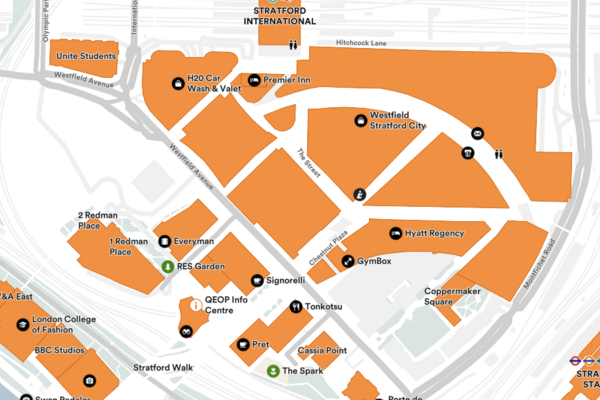
Stadium wayfinding is everything that helps people find their way into, around and out of a venue: signs, stewards, printed plans and, increasingly, a digital map on the fan's own phone. A good digital map gets fans to the right gate and seat, shows them what the stadium offers, and changes with every event.
Below are short, plain answers to the questions stadium operators tend to ask about it. For the bigger picture, read The stadium map that works for the operator.
What is stadium wayfinding?
It's how a venue helps people get where they need to go, from the station to the turnstile, the turnstile to the seat, and the seat to the food stand, the toilets and back out again.
Signs and stewards do much of this today. A digital map adds things signs can't: a route from where someone is to where they need to be, a search for a specific stand or facility, and changes that show on the day. For the operator, it's also a way to put food, merchandise, offers and sponsors in front of fans.
Do fans need to download an app to use a stadium map?
No. Living Map runs in a web browser, so the map opens from a link in a ticket email, a QR code or the venue's website, on any phone.
That matters for away fans and concert-goers, who won't install a club app for one visit. The Met in New York works this way, with its map linked from the museum's own website.
If the stadium already has its own app and would rather the map lived there, it can sit inside the existing app, so regulars find it where they already look.
Can a stadium map take fans from their ticket to their seat?
It can. Everything about a view of a Living Map, including a route, lives in its web address, so a route from a particular entrance to a particular block can be shared as a link or a QR code.
A ticket confirmation, the club app or a sign at the turnstile could open that route. This is a capability of the platform rather than something already running at a stadium, and how it would fit a club's ticketing is a conversation to have with that club.
How can a digital map help food and merchandise sales at a stadium?
By showing fans what's there. People can't buy from a stand they haven't found, and on a busy concourse many join the nearest queue.
The map can show every food stand and what it serves, including dietary options where the caterer provides that information, along with pop-up merchandise stands, the club shop and family activities. Venue teams can also promote offers and events through pop-ups on the map, such as live music or the club shop staying open after the match.
How do you keep a stadium map up to date for concerts and other events?
The venue's own team, the Living Map team, or a mix of both. Living Map clients can update their map themselves through the Map Management System (MMS): set it up for a concert, a conference or a stadium tour, and change it on the day if a gate closes or a kiosk moves.
The Living Map team can also take on some or all of those updates. How the work is shared depends on the people and time the stadium has, and on how often the map needs to change. Our approach is to fit around each customer's own capabilities and resources, so the map stays as up to date as possible.
As Nick Jeffery, who heads up Operations at Living Map, has put it: “The aim is for clients to feel entirely confident in making changes themselves, freeing them from reliance on us for routine updates.”
Can a stadium map show first aid points and defibrillators?
Yes. The map can show first aid points and defibrillators alongside other facilities, so fans and staff can see where the nearest one is.
It sits alongside the stadium's own safety arrangements rather than replacing them. Because the venue team manages the map, they can keep those locations accurate when the layout changes for an event.
How does digital wayfinding help disabled fans?
By showing a route that works for them. Step-free routing is a core part of Living Map, so the map can show the way to accessible seating, lifts (elevators), accessible toilets and, where the ground has one, a Changing Places toilet.
Fans can plan the route before they leave home, rather than finding out on the day that the obvious way in involves stairs.
Can sponsors appear on a stadium map?
Yes. The map can open with the venue's or a sponsor's branding, such as a naming-rights partner's name. Spaces such as executive or hospitality boxes can carry the holder's company name and logo.
Can a stadium map show train and bus times?
Yes. Living Map can show live transport departures inside the map, and already does at London St Pancras and a number of shopping centres. At a stadium, that means fans can see the next trains and buses as the match ends, and decide when to leave with the departure times in front of them.
What data does a stadium map collect about fans?
No personal data. Living Map collects no personal data, and usage analytics are anonymous.
What the analytics do show is what visitors searched for, in their own words, and that is useful. A few ways a venue team might use it:
- If fans keep searching for something the map doesn't show, such as a cash machine or somewhere to charge a phone, add it to the map or signpost the nearest one.
- If searches for the club shop rise after the final whistle, keep it open later or put a pop-up near the busiest exits.
- If vegan food, baby-change or accessible toilets come up again and again, check they're easy to find on the map and well signed on the concourse.
- Compare what concert crowds look for with what matchday crowds look for, and set the map up differently for each.
Where is Living Map used today?
In large, busy buildings where layouts change and crowds peak, including Trafford Centre in Manchester, Metrocentre in Gateshead, Lakeside in Essex, London St Pancras and The Met in New York.
If your stadium hosts more than one kind of event, we'd be glad to talk through what the map would need to do on each of them.
Request a demo
Experience the power of our mapping, wayfinding, and asset tracking technology for yourself. See how our software can enhance your facility.