The stadium map that works for the operator


A stadium map has two audiences. Spectators want to find their seat, the toilets and something to eat. The operator, who pays for the map, wants more from it: people through the right gate and in their seats before kick-off, comfortable and spending while they're there, and enjoying the day enough to come back.
A good digital map serves both, because the operator's goals depend on the spectator's day going well. It sends people to the right entrance first time, shows them everything the stadium sells and where to find help, and carries the venue's offers and sponsors. The venue's own team keeps it current from one event to the next.
The right gate, first time
Most of a matchday crowd could walk to their seat blindfolded. The people who can't are the away fans, hospitality guests, families on a first visit and, on other days, every concert-goer and conference delegate. When they arrive at the wrong side of the ground, they walk the long way round and ask a steward on the way.
The ticket is the best place to start. Everything about a view of a Living Map lives in its web address, including the route. So a link in the ticket confirmation, a button in the club app or a QR code outside the ground could open the route from the fan's entrance to their own block. This is a capability of the platform, not something already running at a stadium, and how it fits a club's ticketing is a conversation to have with that club.
Show people everything the stadium sells
People can't spend money at a stand they haven't found. On a busy concourse at half-time, many fans join the nearest queue because they don't know what else is there.
The map can show every food stand and what it serves, including dietary options where the caterer provides that information. It can show pop-up merchandise stands as well as the club shop, family activities, toilets and smoking areas. A fan can find another stand, the vegan option or the kids' zone without asking anyone.
The map also tells the operator what people looked for. Living Map collects no personal data, and usage analytics are anonymous. Taken together, though, they show what visitors searched for, in their own words: what people wanted on the day, and what to add or make easier to find before the next event.
As Nick Jeffery, who heads up Operations at Living Map, said in a recent interview: “It’s about giving them powerful tools to make their map a genuine commercial asset.”
Knowing where help is
Feeling comfortable at a big event starts with knowing where help is. The map can show first aid points and defibrillators alongside everything else, so a fan, a parent or a member of staff can see where the nearest one is. It can also show quiet rooms, baby-change facilities and family areas where the ground has them.
This sits alongside the stadium's own safety arrangements, not in place of them. The venue team decides what goes on the map, and because they manage it themselves, they can keep it accurate. If a first aid point moves for a concert, the map moves with it.
A better day, so they come back
For the operator, a good matchday is one fans want to repeat. Much of what spoils a first visit is small: the wrong gate, a long walk round the ground, a queue for the wrong thing, a family that can't find the baby-change. A map on the fan's own phone answers those questions before they become a bad memory of the day.
It matters most for the fans with most to lose from a bad day. Step-free routing is a core part of Living Map, so the map can show the way to accessible seating, lifts (elevators), accessible toilets and, where the ground has one, a Changing Places toilet. A disabled supporter or a family with a pushchair can plan the day before they leave home.
A reason to stay after the final whistle
At full time, much of the crowd heads straight for the station or the car park. For the operator, that is the end of the day's spending.
The map can give people a reason to stay. Venue teams can promote what's on after the match: live music, food offers, the club shop open late, or activities for families. A fan who sees that on their phone as the whistle goes has a choice they didn't have before.
For those who do head home, onward travel matters. At London St Pancras, Living Map shows live transport departures inside the map. At a stadium, the same approach could show the next trains and buses, so people can decide when to leave with the departure times in front of them.
Put the sponsor on the map
Many large stadiums carry a sponsor's name, and their hospitality boxes are sold to corporate clients. The map can open with the stadium's sponsored name and branding, and an executive box can carry the name and logo of the company that holds it. For a naming-rights partner, that is their brand on the screen of every fan who opens the map.
One stadium, many events
The same building hosts concerts, conferences, stadium tours and Christmas parties as well as matches. Each one changes which gates are open, which kiosks are serving and which areas are closed, and each brings its own crowd, offers and sponsors.
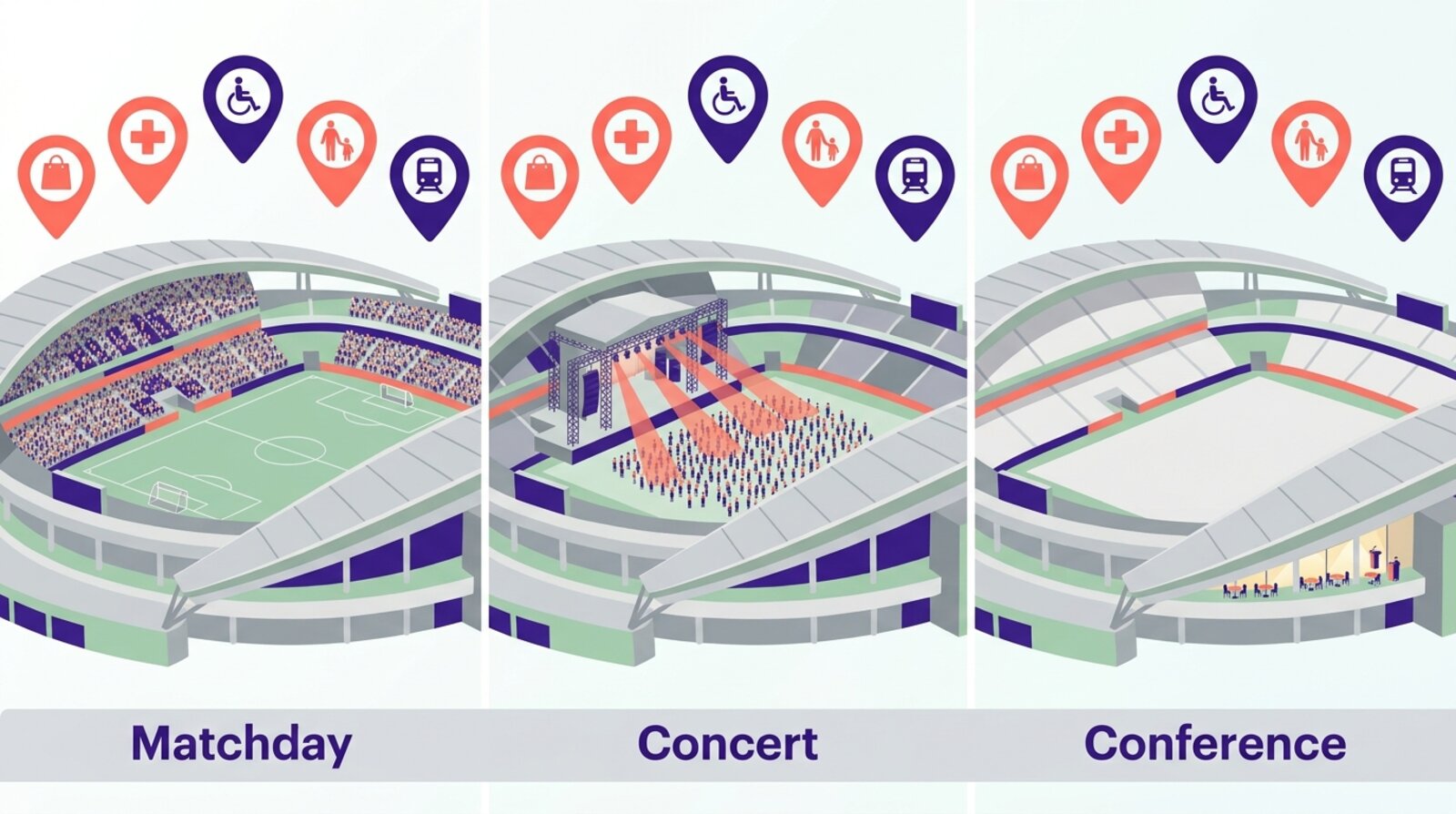
As Nick Jeffery put it in the same interview: “A static map quickly becomes a liability.” With Living Map, the venue team manages the map themselves through the Map Management System (MMS). They set it up for each event and update it on the day, without raising a ticket with a supplier. The Met in New York uses its digital map in the same way, directing visitors to it for the latest information on gallery closures.
No app to download
An away fan won't install the home club's app for one afternoon, and a concert-goer won't either. Living Map runs in a web browser, so the map opens from a ticket email, a QR code or the venue's website on any phone. For regulars who already use the club app, the map can be offered there too.
Built for busy buildings that keep changing
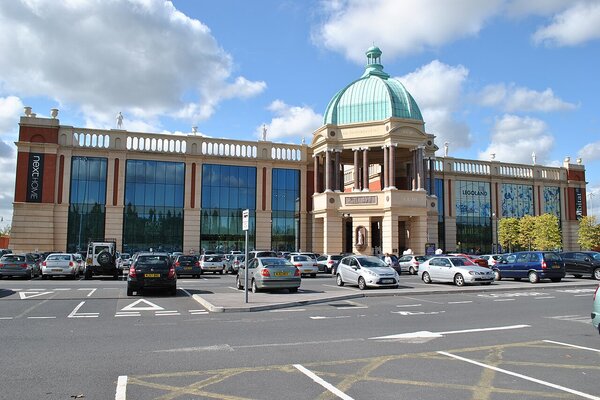
Living Map runs at Trafford Centre in Manchester, Metrocentre in Gateshead, Lakeside in Essex and London St Pancras: large, busy buildings where layouts change and commercial teams need the map to earn its place. A stadium has the same needs, squeezed into a few hours. In summer 2028, nine stadiums across England, Scotland, Wales and Ireland will host EURO 2028 matches, and many of the fans inside them will be visiting for the first time.
“A stadium operator wants two things from a matchday: people in and settled quickly, and good reasons for them to stay and spend. A map that's right on the day, carries the venue's offers and sponsors, and costs fans nothing to open helps with both,” said Nick Jeffery, Operations Lead at Living Map.
If your stadium hosts more than one kind of event, we'd be glad to talk through what the map would need to do on each of them.
Request a demo
Experience the power of our mapping, wayfinding, and asset tracking technology for yourself. See how our software can enhance your facility.