Beyond the Blueprint: How Living Map Guides Clients to Wayfinding Success


Onboarding sets the tone for every client relationship that follows. In this conversation, Nick Jeffery, Chief Operating Officer at Living Map, explains how the company turns onboarding and implementation into a collaborative, transparent journey — from the first hour after a contract is signed to the ongoing evolution of a live digital map. He shares how Living Map tailors its approach across retail, health, transport and culture, why technical precision must always serve the end user, and why a living map is never truly finished.
Welcome, Nick. We’re often hearing from businesses about the challenges of client onboarding, especially within the tech sector. Many clients dread it, seeing it as a bureaucratic hurdle. At Living Map, however, we aim to make it smooth, transparent, and even enjoyable. Could you tell us how Living Map approaches client onboarding differently to achieve this? How do we avoid common pitfalls like “too many questions” or information collected in the wrong sequence?
NJ: Thanks. It’s a great question, and it really gets to the heart of what we believe makes Living Map unique. Look, nobody wants to feel like they’re going through a lengthy interrogation just after they’ve made a big decision to partner with someone. We’ve all been there, right? Our approach is built on a few core principles. First, we recognise that every client is eagerly anticipating the benefits of our solution, not the process of getting there. So, we flip the traditional script. Instead of starting with a data dump, we start with understanding their vision and their immediate priorities. What are they hoping to achieve first? What’s the biggest pain point they want to solve? This helps us tailor our information gathering, rather than just hitting them with a generic list. Second, we’re very deliberate about the sequence and timing of our questions. We know from experience that overwhelming clients early on can lead to disengagement. We break down the information needed into logical, digestible steps. We also leverage our internal expertise. Our project managers and engineers know exactly what’s critical at each stage, so we’re not asking for things we already have or that aren’t immediately relevant. It’s about being thoughtful, not wasteful, with our clients’ time.
That makes perfect sense. What does Living Map do immediately after a new client comes on board? What’s our internal “trigger” for onboarding, and what essential information do we prioritise?
NJ: For us, the trigger isn’t just the signed contract; it’s the moment our sales team officially hands over to our delivery and technical teams. That’s when the clock starts internally. Our immediate focus is twofold: confirmation and preparation. First, we send a personalised welcome communication – not a generic, automated email – acknowledging their partnership and outlining the very next steps, usually within hours. This isn’t just “we’ll be in touch soon,” it’s “here’s who you’ll hear from next, and here’s what to expect in the coming week.” Transparency is key from day one. Second, internally, we immediately convene the core project team. The essential information we prioritise at this stage isn’t complex technical data. It’s about understanding the key stakeholders on the client-side, confirming their primary objectives, and ensuring all relevant documentation from the sales process is clearly laid out for the delivery team. It’s about setting up our internal teams to be productive and informed without having to chase the client for basic context. We want to show them they’ve made the right choice by proving our professionalism and efficiency from the get-go.
Building on that, how do we establish a strong working relationship from day one and gather critical information without overwhelming the client? What does Living Map’s intake process look like to ensure we get the right information efficiently?
NJ: A strong working relationship is built on trust and clear communication. Our intake process is designed to be collaborative, not prescriptive. We assign a dedicated delivery manager and a technical lead right away. These individuals become the client’s main points of contact, fostering a direct and consistent dialogue. Our intake isn’t a single, long questionnaire. It’s more of a guided conversation, often spread across a few initial touchpoints. We use structured yet flexible templates to capture key data about their site – architectural drawings, existing systems, user demographics, specific pain points, and success metrics. The beauty of this is that our experts can listen, clarify, and proactively identify potential gaps or opportunities. We also make it clear why we’re asking for certain information. When a client understands that providing specific CAD files or details about their existing Wi-Fi infrastructure will directly accelerate their map’s development or improve its accuracy, they’re much more bought in. It’s about showing the value in every piece of data we request. This user-centric approach is woven into everything we do, right down to designing the map itself.
That approach to information gathering seems to be a key differentiator. What happens after this initial information is collected? How do we ensure a seamless transition from the sales team to the technical and implementation teams, avoiding any “information silos” internally, and ensuring our teams have all they need without repeatedly asking the client?
NJ: This is where our internal collaboration really shines. We understand that “information silos” are a common frustration for clients when moving from sales to delivery. We combat this aggressively. Our sales team does more than just close a deal; they capture vital context, client needs, and strategic objectives, which are then formally handed over and reviewed with the delivery, product, and technical teams. We have regular internal project kick-off meetings where the sales team effectively briefs the delivery team, sharing insights that go beyond just the technical specifications. It’s about understanding the why behind the project. All this information lives in a centralised, accessible system accessible to the entire project team. This means our technical engineers or product specialists can access background notes, previous conversations, and agreed-upon goals without having to ask the client to repeat themselves. If we do need clarification, it’s typically highly specific and from the relevant expert on our team, demonstrating that we’ve done our homework. This integrated approach ensures that from the client’s perspective, they’re dealing with one cohesive Living Map team, not disparate departments.
The environments Living Map works with are often large and complex. How do we manage client expectations regarding timelines and deliverables during onboarding, especially given this inherent complexity?
NJ: Managing expectations transparently is absolutely critical, especially in complex environments. We’re never going to promise something we can’t deliver, and we’re always upfront about what’s involved. Early on, we provide a clear, phased project plan. This isn’t just a list of tasks; it includes milestones, interdependencies, and realistic timeframes for both our work and tasks the client needs to complete. We highlight potential complexities and factors that might influence timelines, such as the availability of accurate architectural drawings or the client’s internal approval processes. We also educate them early on about the nature of a “living map” – that it’s an evolving entity that requires ongoing management. This proactive communication helps set the stage for a realistic and ultimately more successful project. We schedule regular check-ins, actively track progress, and address any potential delays or changes openly and quickly. No surprises means greater trust.
Now, let’s talk about bringing the map to life. Once a client is onboarded, what are the crucial steps Living Map takes to transform architectural diagrams or site plans into a dynamic, functional “living map”? Phil Rae, our Chief Product Officer, often speaks about the “map as the source of truth” – how does this translate into our implementation steps, from CAD to GIS?
NJ: This is where the magic really starts to happen, and it’s a testament to our technical expertise. The principle of the “map as the single source of truth” is foundational for us because it enables so many different use cases and efficiencies. Our process starts intensely technical. We take the client’s raw data – often CAD diagrams, architect drawings, or even PDFs – and our GIS specialists convert these into our proprietary map data format. This isn’t just digitising an image; it’s about building a georeferenced, layered, and intelligence-rich representation of the physical space. Every wall, corridor, point of interest, and accessibility route becomes a data point. From there, our engineers integrate this data into the Living Map Platform, configuring the routing engine, optimising for performance, and setting up the interactive elements. We then move into a crucial phase of feature integration – adding points of interest, special routing rules, accessibility data, and bespoke branding elements that make the map unique to that client. So, in essence, we go from fragmented blueprints to a unified, intelligent, and interactive digital twin of their space.
Living Map works with highly technical data, but ultimately, our maps are for people. How do we ensure that the technical implementation always serves the end-user experience? Can you share an example of how we “abstract and smooth out corners” while remaining true to the ‘ground truth’?
NJ: Exactly, the user is always at the forefront. Technical precision is non-negotiable for accuracy, but real-world user experience isn’t about seeing every single pipe or vent. It’s about clear, intuitive guidance. “Abstracting and smoothing out corners” is a fantastic way to put it. Think about the London Underground map, for instance. It’s a topological marvel – it doesn’t represent geographical distance or bends accurately, but it guides you brilliantly. We apply a similar principle. While our underlying data is geometrically precise for operational uses like asset tracking or facility management, the map presented to the end user is optimised for clarity and ease of navigation. For example, a physical building might have a very complex, jagged corridor. Technically, we map every single bend. But for a user, displaying every tiny turn on a navigation line would be overwhelming. So, the public-facing map might simplify that visual routing, showing a smoother, clearer path, while the underlying routing engine still calculates the exact, efficient route. Or, we might highlight key landmarks or branding elements more prominently than other features, because those are what a user will actually look for. It’s about curating the experience, removing visual clutter, and presenting information in the most digestible way, without compromising the underlying ‘ground truth’ that powers accurate routing and other functionalities.
Indoor positioning is notoriously difficult compared to GPS outdoors. What considerations do Living Map’s implementation teams take into account to deliver the best possible indoor navigation experience given current technological constraints, and how do we manage client expectations around positioning accuracy?
NJ: You’re absolutely right, indoor positioning is a different beast from outdoor GPS. We’re honest and transparent with our clients about this from day one. You can’t rely on satellite signals inside a building, and while technologies like Bluetooth beacons offer greater accuracy, they come with infrastructure costs and maintenance. Our core offering is incredibly powerful web-based digital wayfinding and routing, which works on any device without a download. We often combine this with strategic “you are here” points, QR codes, or even client-provided Wi-Fi triangulation data to give users context. When a client needs precise “blue dot” indoor positioning, we’re expert at implementing and integrating with various technologies. We discuss the pros, cons, and budget implications of Bluetooth Low Energy (BLE) beacons, Wi-Fi fingerprinting, or other methods. Our goal is to ensure the solution aligns with the client’s specific needs and budget, providing the best possible experience within those parameters. We educate them on the difference between 3-metre accuracy and 30-metre accuracy, what it means for the user, and what it costs. Ultimately, we deliver a reliable and intuitive experience, even if it’s not always hyper-precise “blue dot” accuracy. We focus on getting people confidently from A to B.
The Map Management System (MMS) is a core part of the Living Map platform. How is the MMS integrated into the implementation process to ensure clients are set up for self-sufficiency and dynamic control from day one? What training or resources do we provide to ensure sustainable map management post-launch?
NJ: The MMS is absolutely central to our “living map” philosophy. We don’t just hand over a static map; we empower our clients to own and evolve their digital space. This begins during the implementation phase. As we build out their map, clients get early access to the MMS. We take them through comprehensive training sessions, tailored to their specific needs and the roles of their staff. This isn’t just a technical walkthrough; it’s about showing them how simple it is to update points of interest, adjust opening hours, add promotional overlays for retail, or even temporarily close a route – for example, if a gallery is undergoing maintenance. The interface is designed to be intuitive, requiring no technical mapping expertise. We provide detailed user guides, video tutorials, and ongoing support. The aim is for clients to feel entirely confident in making changes themselves, freeing them from reliance on us for routine updates. This self-sufficiency is a huge benefit, ensuring their map always reflects the real-time reality of their dynamic environments and maximising the value of their investment. It’s a continuous partnership, where they manage the day-to-day, and we’re there for strategic evolution.
Phil also mentioned that “the map is never done.” How does Living Map set clients up for success in maintaining and evolving their map post-launch, beyond the initial implementation? What training or resources do we provide to ensure sustainable map management?
NJ: The “map is never done” insight is powerful, and it’s a core tenet of our platform. Buildings change, tenants move, departments relocate, even events create temporary shifts in how spaces are used. A static map quickly becomes a liability. Beyond the initial MMS training, we embed the expectation of ongoing map maintenance and evolution from the outset. We highlight the ease with which changes can be made through the MMS, fostering a culture of ownership within the client’s team. We also offer ongoing support packages, a dedicated client success manager, and regular check-ins to review their usage, new features, and any emerging needs. For example, we might review their analytics dashboard data with them and suggest ways they could optimise their map to guide users more effectively based on observed patterns. We ensure they know about any new features the Living Map Platform releases that could benefit them directly. It’s not just about providing the tools; it’s about enabling them to continuously derive value and adapt their map as their environment changes.
Living Map serves diverse sectors – retail, health, transport, culture. How does our onboarding and implementation process adapt to the unique needs and priorities of each, and what are some key differences when onboarding, say, a large shopping centre versus a hospital or a transport hub?
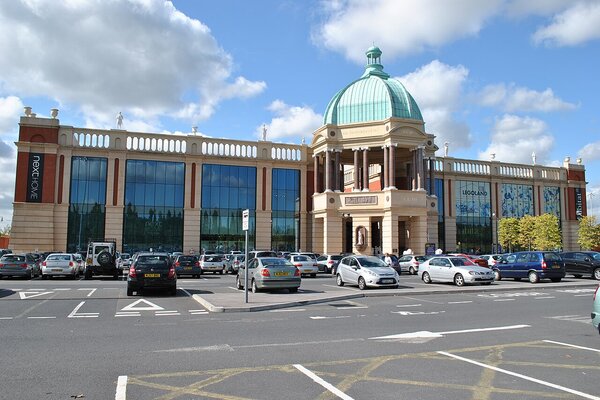
NJ: This is where our agile and collaborative approach really shines. While the core platform technology is incredibly versatile, our onboarding and implementation are always tailored because a hospital’s priorities are vastly different from a shopping centre’s. For a shopping centre like Metrocentre or Trafford Centre, the focus during onboarding is often on commercial outcomes: maximising footfall to specific stores, improving dwell time, optimising promotional pathways, and enhancing the overall visitor experience. So, our information gathering includes details about tenant lists, branding guidelines, analytics requirements, and often integration with other retail systems. The map design will prioritise retail visibility, promotional overlays, and ease of finding brands. For a hospital like South Warwickshire University NHS Foundation Trust, the absolute priority is clear: patient and visitor anxiety reduction, efficient staff movement, and reducing missed appointments. Our discussions during onboarding will centre on critical care pathways, accessibility needs, integration with appointment systems, and often how the map can assist with internal operational efficiency like asset tracking for medical equipment. The map design will be stripped back, focused on clarity, accessibility, and urgent care navigation. And for a transport hub like St Pancras or Lima Airport, the key is usually high-volume passenger flow, real-time updates like gate changes or delays, multilingual support, and connections to external transport networks. Our onboarding would focus on integration with flight/train information systems, crisis management routing, and passenger amenities. In each case, our project teams, with their deep sector experience, understand these nuances and ensure the onboarding and implementation journey addresses them directly.
Staying with retail for a moment, what are the unique aspects we prioritise during onboarding and implementation for shopping centres to maximise benefits like dwell time, footfall, and tenant value? How do we incorporate things like retailer logos, promotional overlays, and data analytics dashboards differently for retail clients?
NJ: For retail, it’s all about driving commercial outcomes alongside an exceptional visitor experience. During onboarding, we dive deep into their commercial strategy. We discuss how they measure success – specific footfall metrics, conversion rates, tenant satisfaction. Implementation then incorporates features designed for these goals. Retailer logos aren’t just decorative; they’re clickable, leading to store information and routing. We enable promotional overlays where specific offers or events can be highlighted dynamically on the map. Our analytics dashboards are configured to track popular routes, search terms for stores, and dwell times, providing actionable insights for centre management and leasing teams. They can see, for example, if a particular area of the mall is underperforming in terms of visitor engagement, allowing them to adjust promotions or wayfinding signage. The MMS for retail clients often has additional features for managing tenant data, promotional content, and even dynamic content like parking availability. It’s about giving them powerful tools to make their map a genuine commercial asset.
Within a single client, there are often different stakeholders. How do we tailor our onboarding to ensure all relevant internal teams are engaged and their specific needs addressed? How do we facilitate internal collaboration for our clients, such as bringing facilities and customer experience teams together, as Phil mentioned?
NJ: This is a fantastic point, as it’s a common challenge in any large organisation. We recognise that our solution impacts multiple departments, and a successful project requires internal alignment. During onboarding, we proactively identify these different roles and their respective needs. We typically start with a joint kick-off, bringing all key stakeholders – marketing, operations, facilities, IT, customer experience – to the table. We listen to their individual objectives. The Marketing lead might care about promotional visibility and visitor engagement, whilst the Operations lead is focused on efficient staff movement and asset tracking. Our implementation plan then includes specific training modules and workshops tailored to each group. The MMS, for example, has different access levels and features relevant to specific users. We also facilitate discussions between these client teams, highlighting how our map can serve multiple purposes. For instance, we’d explain to the customer experience team how the same underlying map data that guides visitors to a shop also allows facilities to locate a water meter, sharing the financial and operational benefits. This often sparks new ideas and unlocks unexpected value for our clients, turning their internal silos into collaborative pathways.
Living Map specialises in complex environments. How do we articulate the value of our specialised approach to clients who might initially perceive wayfinding as a simple “map problem”? How do we communicate that our solution scales and handles the true depth of their complexity?
NJ: This is a crucial area. Many clients initially think of a static map or basic signage. We help them shift that perception by focusing on outcomes rather than just features. We don’t just solve a “map problem”; we solve “missed appointments,” “lost revenue,” “inefficient operations,” or “visitor anxiety.” We use concrete examples from our proven deployments – like the stress reduction for patients at Royal United Hospital Bath during critical times, or the operational efficiency gains at The Met Museum. We demonstrate how complexity isn’t a barrier but an opportunity for significant impact with the right solution. Our patented technology is built precisely for this depth. We show them how our solution scales: from a public-facing wayfinding interface to an internal asset tracking system, all powered by that single, accurate source of truth. We emphasise that simply slapping a basic map onto a complex environment often creates more problems than it solves. Our experience in world-class environments, coupled with our expert team and robust platform, shows that we’re equipped to handle the true depth of their unique challenges – not just the surface-level issues.
Finally, beyond the initial implementation, how does Living Map continue to partner with clients to ensure their maps evolve with their buildings and their strategic objectives?
NJ: Our relationship with clients truly is a partnership that extends far beyond launch day. The “living” in Living Map isn’t just a name; it’s our promise. We establish clear lines of communication for ongoing support, feature requests, and strategic discussions. We have a client success team dedicated to understanding our clients’ evolving needs and ensuring they continue to maximise value from the platform. This involves regular reviews, sharing best practices, and informing them proactively about new platform features or industry trends. We often find that once clients see the initial benefits, they start thinking about additional use cases – perhaps integrating with a booking system or a facility management platform. We work with them to plan and implement these enhancements. Ultimately, our goal is to be a valued, reliable, and visionary partner. As their buildings change, their operational needs shift, or their visitor expectations evolve, their Living Map solution is designed to evolve with them, continuously supporting their strategic objectives. It’s an ongoing journey of improvement and innovation.
Request a demo
Experience the power of our mapping, wayfinding, and asset tracking technology for yourself. See how our software can enhance your facility.