How Digital Maps and AI Chatbots Are Improving Airport Navigation

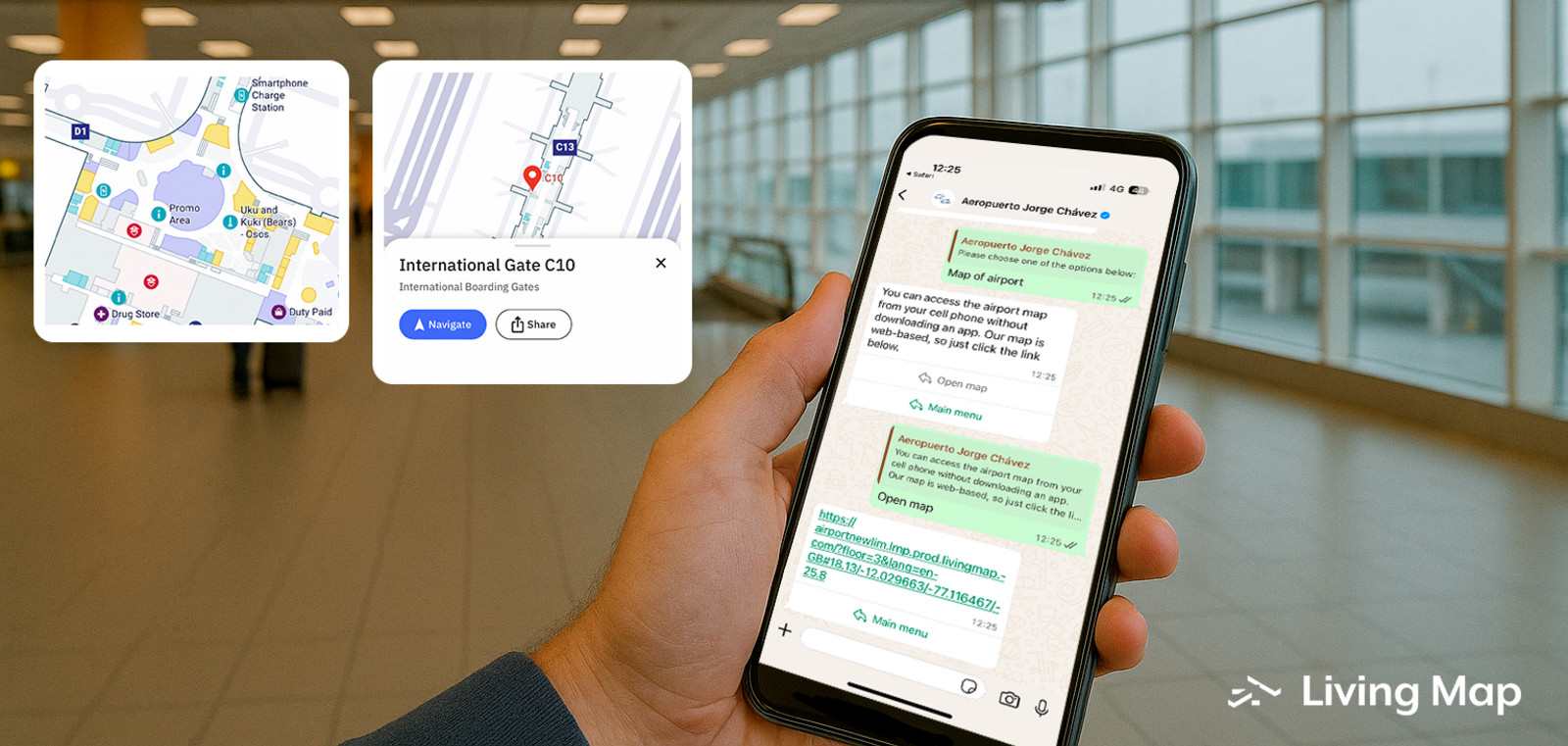
Airports can feel overwhelming for passengers, but digital maps combined with AI chatbots are transforming how people navigate terminals. By providing instant answers and step-by-step directions, this technology reduces stress for travellers and eases pressure on airport staff.
How Digital Maps and Chatbots Work Together in Airports
Airports can make passengers feel overwhelmed or stressed, but digital mapping combined with AI chatbots is now transforming how passengers move through terminals.
At Lima Airport, the launch of a chatbot, supported by organic growth and onsite promotion of the digital map, led to a significant increase in map usage and passenger navigation across the terminal. Airport reports revealed that 90% of chatbot enquiries resulted in passengers using the indoor digital map, showing how central this tool has become to the passenger experience.
This demonstrates that today’s passengers expect airports to provide seamless digital support throughout their journey.
What This Means for Passengers
For passengers, navigation becomes smoother, faster, and less stressful. Clear directions reduce uncertainty, help people move confidently through terminals, and improve the overall airport experience.
What This Means for Airport Operations
For airport teams, fewer passengers rely on staff for directions. This allows employees to focus on higher-priority tasks and provide better support where it is needed most, improving operational efficiency across the terminal.
The Benefits of Digital Maps and AI Chatbots in Airports
Always-on passenger support
Chatbots provide quick, accessible answers around the clock and integrate seamlessly with digital maps, ensuring passengers get help whenever they need it.
Reduced pressure on information desks
By answering common questions digitally, airports can reduce queues and demand at physical information points.
Accurate, real-time navigation
Digital maps provide up-to-date directions to gates, shops, services, and facilities, helping passengers navigate with confidence.
Real-World Airport Example
This is not just a concept. Lima Airport and Mactan–Cebu Airport are already benefiting from this technology. Find out how it works here.
FAQs
How do digital maps improve airport navigation?
Digital maps give passengers step-by-step directions inside terminals, helping them find gates, services, and facilities quickly. This reduces confusion, shortens journey times, and improves the overall travel experience.
How do AI chatbots support passengers in airports?
AI chatbots answer common questions instantly, such as directions, facilities, or services. When combined with digital maps, they guide passengers directly to their destination, reducing reliance on staff.
Do digital maps reduce pressure on airport staff?
Yes. By handling navigation queries digitally, airports reduce the number of passengers seeking directions from staff, allowing teams to focus on safety, service, and operational priorities.
Request a demo
Experience the power of our mapping, wayfinding, and asset tracking technology for yourself. See how our software can enhance your facility.